T.V. Reed
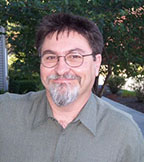
- Professor Emeritus
Biography
T. V. Reed is Professor Emeritus of American Studies and English at WSU. Reed’s scholarship and teaching centers on the politics of cultural forms, and cultural forms of politics, particularly as rooted in social movements. His work has analyzed a wide variety of texts, from literature to film to the World Wide Web to university departments to movements themselves as texts, within a timeframe from the 1930s to the present. This work has included not only the fairly common cultural studies approach of examining the ways in which social trends can be read symptomatically in literature and other cultural forms, but also the equally important, less practiced task of analyzing how cultural forms themselves directly contribute to and are shaped by social movements.
Reed grew up in the San Francisco Bay Area, did undergraduate work in the Northwest, and his PhD at the University of California, Santa Cruz History of Consciousness Program. There, when not in jail for civil disobedience against the US empire, he had the good fortune to take graduate seminars from Michel Foucault, Donna Haraway, James Clifford, Gayatri Spivak, Norman O. Brown, Edward Said, Fredric Jameson, Henri Lefebvre, and Hayden White, among others. That experience, in addition to instilling some particular theoretical approaches, taught Reed two important lessons: 1) even the most celebrated theorists are just flawed human beings with embodied intellectual limits like the rest of us; and 2) the best theorists do not fetishize their own theories but are rather in a constant state of evolution and self-questioning.
Teaching & Research Interests
- Contemporary Multicultural US Fiction
- Interdisciplinary Cultural Theory
- Digital Culture
- Environmental Justice
- Ecocriticism
- Culture in Social Movements
Publications
Five of Reed’s books approach the terrain of cultural politics in differing but related ways. The Art of Protest: Culture and Activism from the Civil Rights Movement to the Streets of Seattle (University of Minnesota Press, 2019 [2nd edition]), examines cultural texts produced in and for particular social movements, from the 1950s to the present. It looks, for example, at the transformation of spirituals into movement “freedom songs” in the struggle for African American Civil Rights, the use of murals by the Chicano/a movement, drama in the Black Power movement and Black Lives Matter, poetry in the women’s movement, cinematic representation of the American Indian Movement, graphic arts in AIDS activism, and new media arts in the movement against corporate globalization. Each of nine chapters examines the particular contributions a different cultural form can offer to social change, analyzes the way in which cultural forms shape social movements, and traces the diffusion of movement texts out into the wider society.
Where Art of Protest concentrated in its examples on the period of US social movements in international contexts since the 1950s, Robert Cantwell and the Literary Left: A Northwest Writer Reworks American Fiction (University of Washington Press, 2014) moves back into an earlier decade to pursue a related set of questions about politics and literature. A critical-cultural study of radical novelist Robert Cantwell’s career in the 1930s, the book serves as a case study for rethinking the “proletarian” or left literary movement of the Depression years. The book seeks to get beyond the heroic white male worker archetype, instead situating this largely Marxist literary movement in the larger raced, gendered and sexed context of what Reed, building on Michael Denning, calls “the reworking of US literatures.” Without denying certain formulaic ideological dimensions in some leftist works of the era, and the dominance at some points of images of a heroic white male proletarian, the book argues that we still have not come out from under Cold War-influenced caricatures of this literary era. Reed argues that the conservative critics of radical thirties literature have actually offered far more ideologically reductive readings than have the texts they criticize. The book demonstrates how misreadings of the 1930s continue to suppress a nuanced class component of intersectional cultural analyses that deal more thoughtfully with race, gender, sexuality and other categories of social difference. He further argues that denigration of 1930s working class-centric cultural texts continues to inhibit serious understanding of economic classes in US social movement contestation, a fact that accounts in part for the limited longevity of the Occupy Wall Street Movement.
Two of Reed’s book explore the concept of “postmodernist realism.” Fifteen Jugglers, Five Believers: Literary Politics and the Poetics of American Social Movements (University of California Press, 1992) enters a long-standing debate between those scholars and critics who seek to reduce literature and art to a wholly self-contained realm above politics and ideology, and those who seek to portray literature as simply reflecting ideological positions. Reed takes a position that mediates between these schools of thought by arguing that while literature is political, it is political in unique ways that cannot be reduced to and can in fact be used to resist reductive ideological positions. This requires a strategy he calls “postmodernist realism.” This names at once a mode of writing and a mode of reading, one that features self-reflexive, realism-disrupting techniques found in postmodernist fiction but places those techniques in tension with “real” cognitive claims and with “realistic,” radically pragmatic political needs. Reed argues for a “postmodern populism” that acknowledges the contingent nature of truth claims but roots those claims in situated knowledges reflecting unequal power positions that must be changed to allow for truly democratic political contestation. In this light, he shows how schools of critical thought such as neo-Marxisms, feminisms, critical race theories and new historicisms, among others, can be most effective when set in pragmatic relation to actually existing social movements.
Reed takes up this question more broadly in Postmodern Realist Fiction: Resisting Master Narratives (Bloomsbury Academic, 2021). This textbook views postmodern realism as seeking to capture the complex, fragmented nature of contemporary experience while addressing crucial issues like income inequality, immigration, the climate crisis, terrorism, ever-changing technologies, shifting racial, sex and gender roles, and the rise of new forms of authoritarianism. A lucid, comprehensive introduction to the genre as well as to a wide variety of voices, this book discusses more than forty writers from a diverse range of backgrounds, and over several decades, with special attention to 21st-century novels. Writers covered include: Kathy Acker, Chimamanda Ngozi Adiche, Julia Alvarez, Sherman Alexie, Gloria Anzaldua, Margaret Atwood, Toni Cade Bambara, A.S. Byatt, Octavia Butler, Angela Carter, Ana Castillo, Don DeLillo, Junot Diaz, Jennifer Egan, Awaeki Emezi, Mohsin Hamid, Jessica Hagedorn, Maxine Hong Kingston, Ursula K. Le Guin, Daisy Johnson, Bharati Mukherjee, Toni Morrison, Vladimir Nabokov, Tommy Orange, Ruth Ozeki, Ishmael Reed, Eden Robinson, Salman Rushdie, Jean Rhys, Leslie Marmon Silko, Art Spiegelman, Kurt Vonnegut, and Jeannette Winterson, among others.
Reed’s book, Digitized Lives: Culture, Power and Social Change in the Internet Era (Routledge, 2019 [2nd edition]) in effect carries questions of cultural politics into the future by examining the various dimensions of social life being transformed by new digital media. Reed examines both the process of digital culture production—from design to manufacture to marketing—as well as such key arenas as politics, education, social identity (gender, race/ethnicity, sexuality, dis/ability) and various digital divides. Rejecting both cyber-utopianism, and cyber-apocalypticism, Digitized Lives argues that new cultural technologies have great negative and positive potential, and that only an active, engaged citizenry, not some techno-fix, can shape the digital landscape toward greater social justice.
Reed has been active in Digital Humanities, in both the study and the use of electronic media in cultural studies. He is the author/manager of the widely visited website, culturalpolitics.net, that includes sites on Digital Cultures, Environmental Justice Cultural Studies, Popular Culture, Social Movement Cultures, and Interdisciplinary Cultural Theory.
Reed has also published several articles in the area of interdisciplinary peace studies, focusing on aesthetic/cultural forces within the US and international peace movements. He has as well published on decolonial environmental justice cultural criticism in Leslie Silko’s novel, Almanac of the Dead. A piece on the cultural study of social movements will appear next year in the leading European handbook on social movement theory. Reed has been a Visiting Scholar at the Center for Cultural Studies of the University of California, Santa Cruz, a Fulbright Senior Lecturer at the JFK Institute for North American Studies in Berlin, Germany, and a Mellon Fellow at Wesleyan University. He was co-chair of the national American Studies Association’s conference for 2002, has been a member of the ASA’s national council and was one of two nominees for the organization’s presidency in 2011. He has long worked for the internationalization of American Studies, the effort to undercut the ethnocentrism too often found in the field, and has been involved in projects with universities in Germany, Ukraine, Morocco, the Peoples’ Republic of China, and Japan.